
Why Is Sand Moisture a Major Challenge in Foundry Operations?
Maintaining the correct moisture content of molding sand is essential for achieving high-quality, defect-free castings. However, sand moisture is more than just a process parameter that affects mold quality. It is also a critical factor influencing the efficiency of industrial air filtration systems, production continuity, and maintenance costs.
During processes such as shake-out, sand preparation, and sand reclamation, moist sand dust can gradually accumulate inside dust extraction ductwork, reducing the performance of the filtration system. As airflow decreases, production downtime increases, and operating costs rise.
So why does this happen, and how can it be prevented?
How Does Sand Moisture Affect Dust Collection Systems?
Green sand used in foundry operations is prepared by mixing sand with bentonite and water. A moisture content of approximately 2–4% is required to ensure sufficient mold strength.
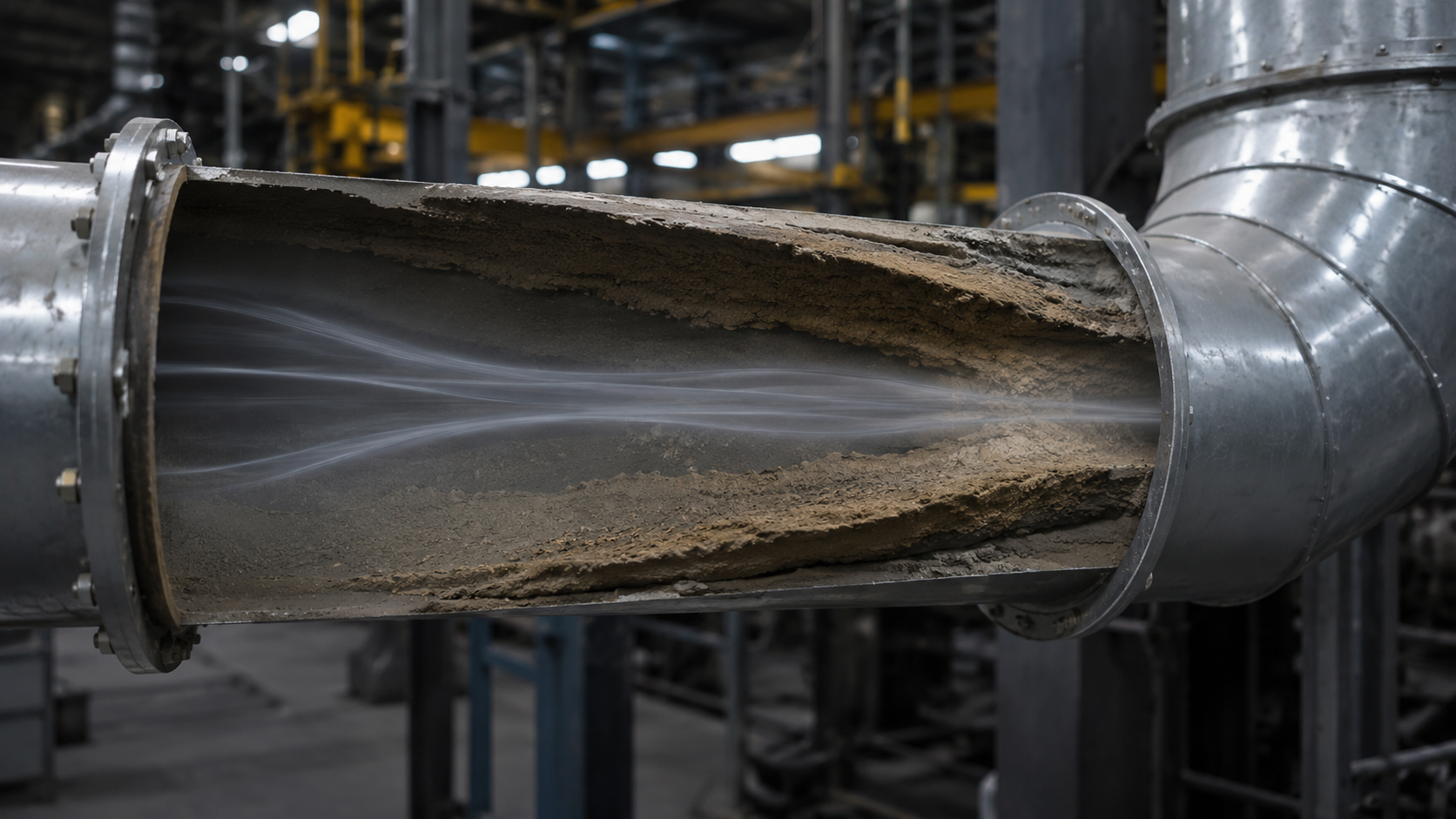
During production, however, fine sand and bentonite particles become airborne together with moist air. Particularly during the shake-out process, these particles are extracted through the dust collection system, where they can adhere to the inner surfaces of the ductwork and gradually build up over time.
This buildup can result in:
- Reduced duct cross-section
- Lower airflow capacity
- Increased pressure losses
- Higher fan energy consumption
- Faster contamination of filter elements
- Increased maintenance frequency
Although this issue may seem minor at first, it can significantly reduce filtration efficiency and overall production performance over time.
How Do Moisture-Related Blockages Affect Production?
Blockages within dust extraction systems affect far more than filtration performance.
Insufficient airflow can increase airborne dust concentrations in the workplace, make production areas more difficult to keep clean, and lead to unplanned downtime due to more frequent maintenance.
In addition, increased energy consumption and reduced equipment life contribute to higher operating costs.
For this reason, controlling sand moisture is essential not only for maintaining casting quality but also for ensuring the long-term efficiency and reliability of industrial dust collection systems.
Bomaksan Solution: Burner Integrated into the Dust Extraction System
To eliminate moisture-related filtration problems, Bomaksan develops engineering solutions tailored to the operating conditions of each foundry.
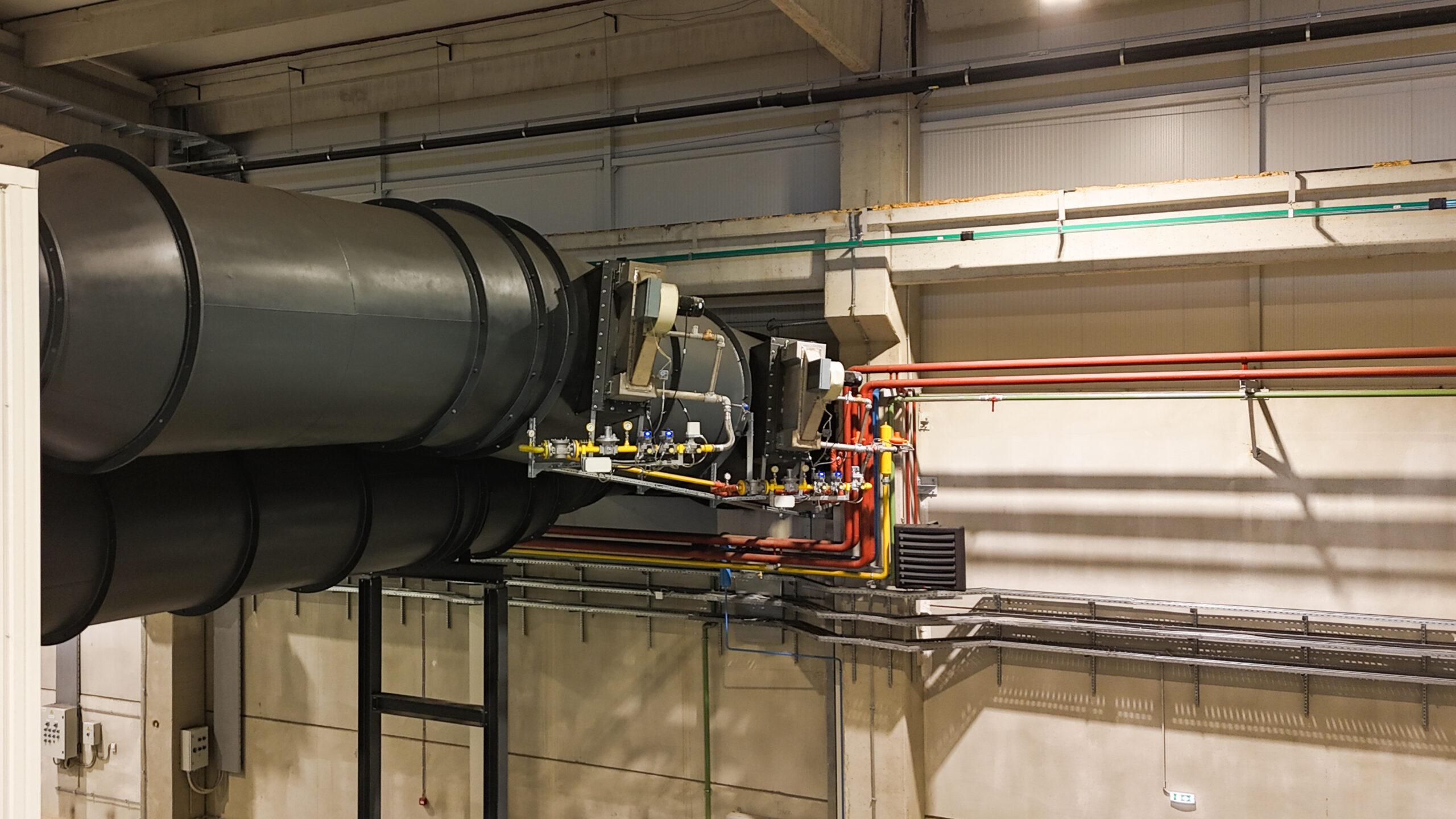
One of these solutions is a burner integrated directly into the dust extraction ductwork.
The burner reduces the moisture load of the extracted air by evaporating excess humidity before it causes problems inside the duct system. As a result, moist sand and bentonite particles are far less likely to adhere to the duct walls.
This provides several important benefits:
- Reduced risk of buildup and duct blockages
- More stable airflow
- Consistent filtration performance
- Lower maintenance requirements
- Increased production continuity
- Reduced operating costs
This approach is particularly effective in sand preparation and shake-out processes where moisture levels are high.
Continuous Control with an Automatic Sand Moisture Management System
Managing moisture within the extraction system alone is not enough. Maintaining the correct moisture content during sand preparation is equally important.
Bomaksan’s automatic sand moisture management system continuously monitors temperature and moisture values at both the inlet and outlet of the cooling drum.
Based on real-time process data, the system automatically adjusts water addition whenever necessary to maintain the target moisture level.
This ensures:
- More consistent sand properties
- Stable mold quality
- Reduced reject rates
- Lower moisture load entering the filtration system
- More stable production processes
Because the entire process is automated, routine maintenance is limited mainly to periodic calibration of the moisture sensors.
A Dual Benefit for Foundries: Higher Quality and Greater Efficiency
When proper sand moisture control is combined with moisture management inside the dust extraction system, foundries can improve both production quality and filtration performance simultaneously.
Bomaksan solutions help customers achieve:
- Higher dust collection efficiency
- Significantly fewer duct blockages
- Longer filter service life
- Lower energy consumption
- Reduced maintenance costs
- Minimized production downtime
- More consistent molding quality
As a result, foundries benefit from lower operating costs while achieving a safer, more reliable, and more sustainable production process.
Conclusion
Sand moisture is not only a key factor in mold production but also a critical parameter affecting the performance of industrial air filtration systems.
With its burner-integrated dust extraction solution and automatic sand moisture management system, Bomaksan helps foundries eliminate moisture-related filtration problems, improve operational efficiency, and achieve safer, more sustainable manufacturing.
If your foundry is experiencing filtration issues caused by excessive sand moisture, contact Bomaksan to discover an engineering solution tailored to your production process.